


When Identity Migration Goes Wrong
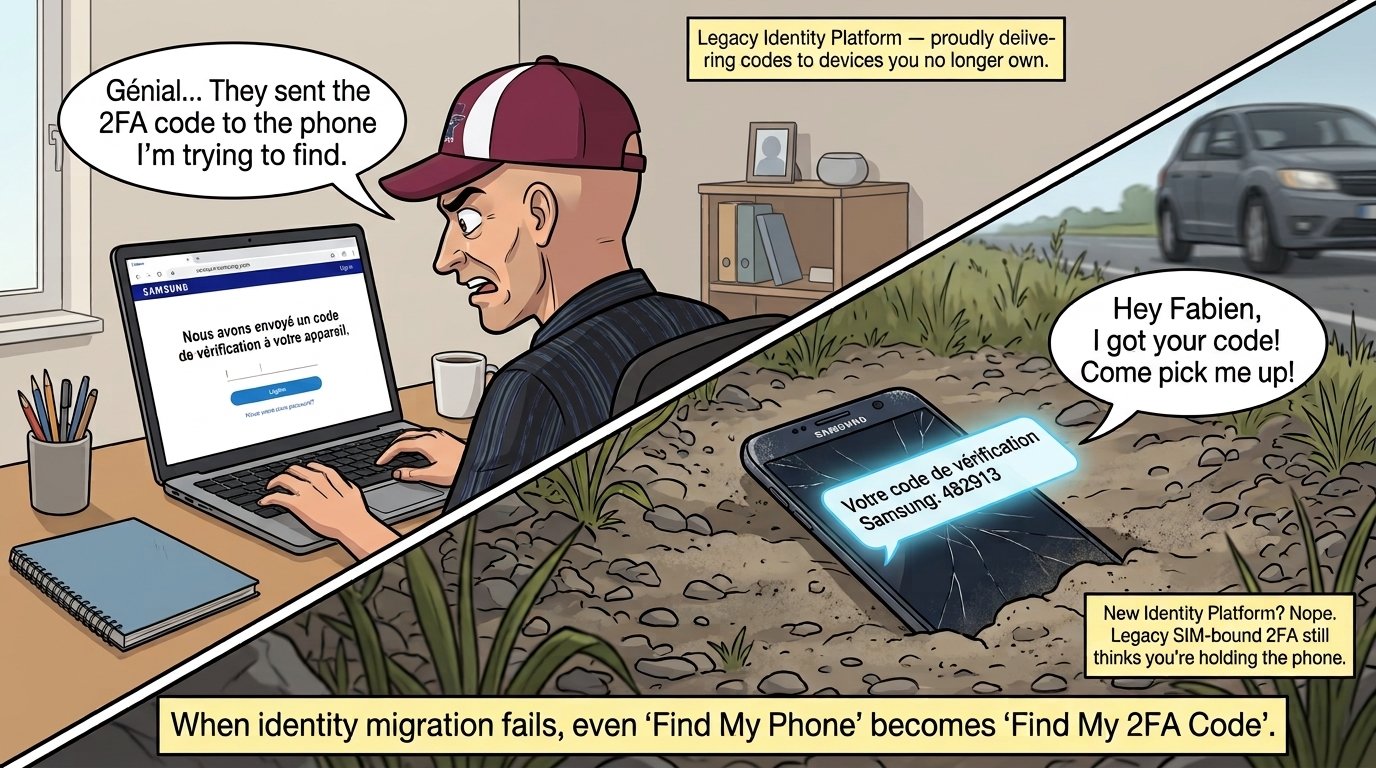
When Identity Migration Goes Wrong
I just experienced one of the most absurd identity-platform migrations I’ve ever seen . . .
and it happened during the worst possible use-case: trying to locate a lost device.
Here’s the story:
The Migration: Two Platforms, One Ridiculous Roundtrip
I used to log in at account.samsung.com. Recently, Samsung migrated device-location features to a new platform:
SmartThings Find checked my email.
It detected that my account still lived on the old identity provider
It redirected me back to account.samsung.com
The old platform asked me to log in
After login, it planned to redirect me back to the new platform
A full authentication roundtrip between two identity systems, just to sign in . . .
This is already questionable architecture. But then came the punchline.
The Fatal Flaw Legacy 2FA Still Bound to the (Lost) Device (laughable)
The old identity provider still uses device-bound 2FA.
So when I tried to authenticate, it proudly announced:
Except… the device is lost. That’s why I’m trying to log in in the first place . . . 😅
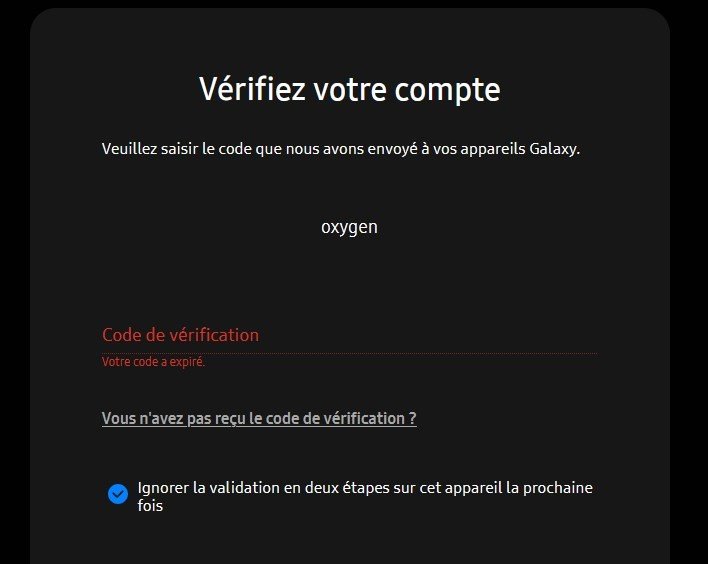
Every fallback option was equally useless: send the code back, send an SMS . . .
This wasn’t a UX bug. It was a migration design failure.
The Only Reason I Eventually Logged In: Sheer Luck
I finally managed to authenticate using Google OAuth2.
But here’s the twist: This only worked because, years ago, I registered my Samsung account using:
my Google email, but not my Google password, using a Samsung-specific password.
In other words: Samsung stored my Google email as the unique account ID
Google OAuth2 returned the same email.
Samsung matched the email and concluded: “This Google account corresponds to an existing Samsung account.”
This was pure coincidence. If Samsung had used an internal UUID instead of the email as the unique identifier, OAuth2 would have created a brand-new empty account, and I would still be locked out.
Bonus for those who’ve made their way till the end of the topic 🍭
So where was that bloody device??
Under the kitchen sink! Typical of me, as I put it there while I would use both hands to reorg the cupboard! Oh My . . . 🙄